

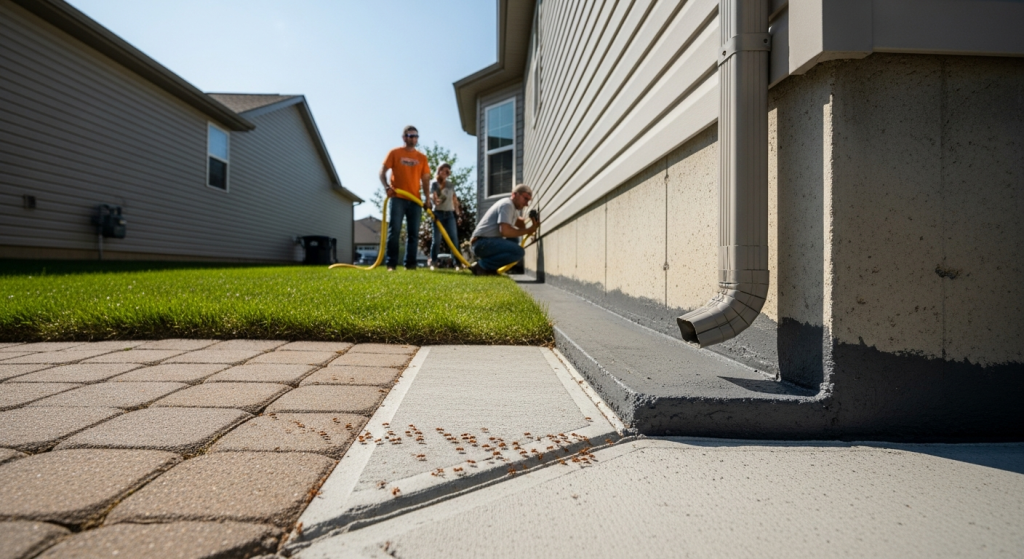
Early 2026 is shaping up to be a rough stretch for property owners dealing with severe rainfall. Meteorologists have issued heavy rain warnings across multiple regions, with 17 states on rainfall alert. All that water doesn’t just threaten your home’s structure. It also drives ants straight through your front door.
When soil saturates quickly, underground colonies lose oxygen and get physically forced out. The ants scramble for higher, drier ground, and your house fits the bill perfectly. So if you haven’t thought about moisture control and exterior sealing yet, now’s the time.
Why Heavy Rain Sends Ants Indoors
Saturation and Colony Relocation
The connection between heavy rainfall and ant invasions is pretty straightforward. Floodwater fills underground nests, cuts off oxygen, and forces entire colonies to relocate fast. The National Pest Management Association’s 2026 Bug Barometer confirms this, forecasting earlier, more severe pest activity due to unusual weather patterns across the country.
Pest control experts recommend homeowners seal entry points before pests show up. Even tiny cracks in your foundation become prime entrances for ants seeking dry shelter during storms. Sound familiar? If you’ve noticed a trail of ants after a heavy downpour, you’ve seen this play out firsthand.
Temperature vs. Moisture
Heat definitely affects colony metabolism, but moisture is the real trigger for physical displacement. Ants forage most efficiently when temperatures sit between 77°F and 95°F. But here’s what’s interesting: a North Carolina State University study found that ants don’t change foraging behavior in response to rising temperatures alone.
It’s the sudden flood of water that forces them out. Understanding in what season are ants most active helps you anticipate these surges before they hit your home. A recent industry survey backs this up, showing nearly a third of people have dealt with repeated ant problems during humid, high-rain periods.
Sealing the Perimeter Before the Storm
Spotting Structural Weak Points
Securing your home begins with a thorough inspection of the exterior. Here are the key vulnerabilities to address before severe weather hits:
- Foundation cracks: Inspect and seal even the smallest fissures or unsealed openings in concrete slabs. Ants only need a tiny gap.
- Utility penetrations: Close gaps around HVAC lines, plumbing pipes, and electrical conduits. These are major underground access routes into your living space.
- Moisture buildup zones: Clear your gutters, birdbaths, and drainage problem areas to keep water from pooling near the foundation, which reliably triggers pest population surges.
- Tree and shrub bridges: Trim back any landscaping or branches touching your home’s exterior. These give displaced colonies a direct path to your siding.
Exterior Barriers and Moisture Control
Stopping ants at the perimeter is the whole goal. Once they set up a nest inside your walls, they can skip their typical winter dormancy thanks to your home’s stable temperature. That turns a seasonal nuisance into a year-round problem.
And here’s a mistake plenty of homeowners make: panicking during an active invasion and reaching for the wrong chemical treatment. Misapplied products can actually cause colonies to split, spreading the problem to multiple spots throughout the house. Professional assessments and proactive moisture management consistently deliver better results.
| Strategy | Cost | Labor | Structural Risk | Effectiveness |
| Pre-storm fortification | Low (sealants, trimming) | Low to moderate | Minimal | High; prevents initial breach |
| Post-storm remediation | High (exterminators, interior repairs) | Extensive | High (contamination, wood damage) | Variable; colonies may split |
Building Long-Term Resilience
Volatile weather and extreme rainfall aren’t going away. One study shows that shifting ant populations are tied directly to rising temperatures, fundamentally changing local insect behavior. Plus, surveys reveal fewer than 1 in 4 Americans can even identify different ant species, meaning most properties face threats they don’t recognize.
So what does that mean for you? Treat perimeter defense as a permanent part of home maintenance, not something you scramble to do when a storm warning pops up on your phone. Get your foundation sealed, sort out drainage issues while the ground is still dry, and keep up with regular inspections. The time to act is before the rain starts, not after the ants show up.
