

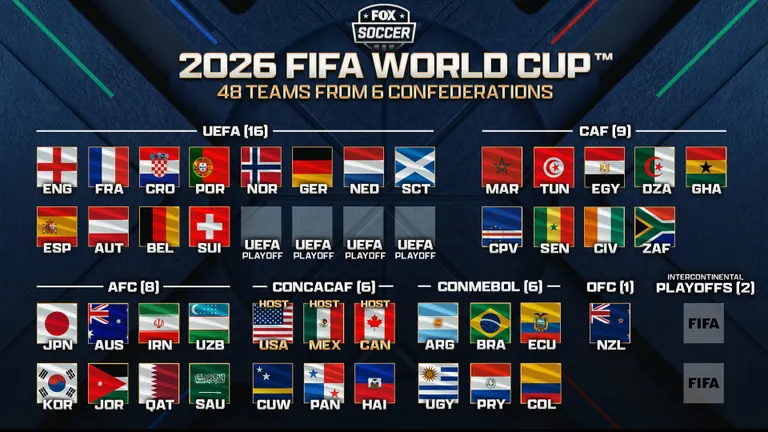
The global football community is currently buzzing with anticipation as the horizon brightens for the most prestigious tournament in sports. The worldcup 2026 is set to be a historic milestone, not only because it will be co-hosted by three nations—the United States, Canada, and Mexico—but also because it will feature an expanded format of 48 teams. This evolution in the tournament structure changes the tactical landscape, endurance requirements, and the path to glory for every competing nation. As the qualification cycles intensify, pundits and fans alike are beginning to analyze which powerhouses and dark horses possess the mettle to hoist the trophy in North America.
The Traditional Powerhouses: Defending the Status Quo
When discussing the favorites for the worldcup, one cannot overlook the giants of South American and European football. History has shown that consistency at the highest level is the hallmark of a champion.
Argentina: The Reigning Monarchs
Lionel Scaloni’s Argentina has demonstrated an incredible ability to adapt and overcome. Having secured the title in 2022, they enter the next cycle with a blend of youthful hunger and experienced leadership. Their tactical flexibility and the morale boost of recent successes make them a formidable force. They are not merely relying on individual brilliance; they have built a cohesive unit capable of dismantling any defensive block.
France: A Reservoir of Talent
France remains arguably the deepest squad in international football. The sheer volume of elite-tier talent available to the French national team ensures they are always contenders. Even with the inevitable transition of generations, the pipeline of talent coming through Ligue 1 and top European clubs keeps them at the forefront of the conversation. Their tactical discipline under Didier Deschamps provides a solid foundation that makes them extremely difficult to beat in a knockout scenario.
The Rising Challengers: Tactical Evolution and Depth
The expansion of the Fun88 to 48 teams means that teams must navigate a grueling schedule. This favors nations with deep benches and tactical versatility.
England: The Golden Generation
The English national team has undergone a significant transformation over the last few years. With a squad brimming with talent from the Premier League—the most competitive domestic league in the world—England has consistently reached the latter stages of major tournaments. Their ability to control games through possession and their clinical edge in front of goal positions them as one of the primary favorites to end their long wait for a major trophy.
Brazil: The Return to Samba Brilliance
Brazil’s obsession with winning the worldcup is unparalleled. After recent disappointments, there is a renewed focus on blending their traditional flair with a more pragmatic approach to tournament football. With a new wave of attacking stars emerging, the Seleção is focused on recapturing the trophy that has eluded them since 2002. Their ability to generate individual moments of magic remains the highest in the world, which is often the difference-maker in tight matches.
The Impact of the North American Setting
Hosting the worldcup across the United States, Canada, and Mexico presents unique logistical challenges. Teams will need to traverse vast distances and adapt to varying climates.
- Logistics and Travel: Nations that can manage the physical toll of traveling between time zones will have a distinct advantage.
- Climate Adaptation: From the heat of the southern United States to the cooler climates of the north, squad rotation and physical conditioning will be paramount.
- Home Advantage: While the hosts may not be the outright favorites, the massive home support in cities like Los Angeles, Mexico City, and Toronto will undoubtedly act as a “twelfth man,” potentially propelling these teams to overperform.
For more insights on the official tournament preparations and stadium updates, you can follow the official FIFA website.
Tactical Trends to Watch
As we look toward 2026, the game is becoming increasingly high-press and transition-oriented. Teams that can successfully marry high-intensity pressing with efficient counter-attacking will dominate the tournament. Furthermore, the role of set-pieces has become a critical pillar of success, often serving as the decisive factor in low-scoring affairs where defenses are tightly organized.
Conclusion
Predicting the winner of the worldcup 2026 is an exercise in analyzing both historical pedigree and modern tactical trends. While Argentina and France currently hold the psychological advantage, the expanded format and the unique host conditions provide a wide-open playing field. England’s depth, Brazil’s flair, and the potential for a host nation to ride the wave of local support ensure that the tournament will be unpredictable and exhilarating.
Ultimately, the team that manages its squad fitness, adapts to the travel demands of North America, and maintains tactical discipline under pressure will be the one to lift the trophy. As the countdown continues, the world watches with bated breath, knowing that 2026 will undoubtedly be a defining moment in the history of the sport. Whether a familiar titan claims the throne or a new challenger rises, the beauty of the game remains the same: it all comes down to those ninety minutes on the pitch.
