

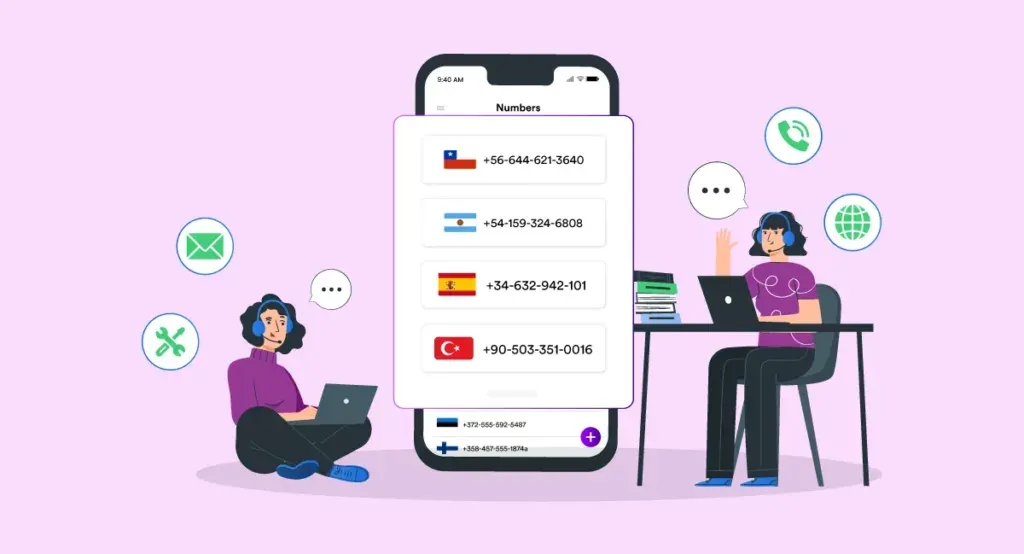
A quiet shift in how internet users handle one of the most common sign-up requirements online.
There’s a small but noticeable shift happening in how people sign up for things online. Fewer users are typing their real phone number into every verification box that pops up — and more are reaching instead for a virtual number for instant SMS, a temporary, cloud-based line rented purely to catch a one-time code. It’s a small habit change, but it reflects a much bigger shift in how people think about their personal data.
The Backdrop: Phone Numbers Became the New Tracking Identifier
For years, email addresses were the default way apps verified a new sign-up. That’s changed. Phone numbers are harder to abandon, more consistently tied to a real identity, and increasingly used across platforms as a way to link accounts, target ads, and cross-reference data between services. Every sign-up form that asks for a number is, in effect, asking a user to add one more permanent record to a growing profile that follows them across the internet.
It’s no surprise, then, that privacy-conscious users started looking for a way to satisfy that requirement without actually handing over anything permanent.
The Workaround That’s Quietly Become Mainstream
A virtual number solves this cleanly. It’s a phone number that exists only in the cloud — no SIM card, no billing address, and in most cases no ability to make calls or send texts of its own. It can only receive an incoming SMS. That narrow job is intentional: because the number does one thing, providers can rent it out for a short session, route the message straight to a private inbox, and recycle the number for someone else once the session ends.
Behind the scenes, a network of carrier-connected numbers spans well over a hundred countries in most catalogs, so the platform receiving the sign-up sees a completely normal, working mobile number — it just isn’t permanently tied to any one person.
How it plays out in practice:
Choose a platform and country → a live number is reserved for a short window (typically 15–20 minutes) → the code is entered on the target app → the SMS lands in a private dashboard within seconds → if nothing arrives, most services refund automatically.
Who’s Actually Driving This Trend
It isn’t just privacy purists. A few distinct groups have been adopting virtual numbers at a steady pace:
- Online sellers and marketers running several storefronts or ad accounts, each needing its own verified line.
- Dating app users who’d rather not link a profile to the same number their workplace and bank already have on file.
- Frequent travelers who run into region-locked apps that only accept a local number.
- Developers and QA teams testing SMS or OTP flows against real, working numbers rather than shared internal lines.
- Everyday shoppers signing up for a one-time coupon or forum they’ll likely never revisit.
The Platforms Where This Shows Up Most
Across most providers’ catalogs, the same handful of apps dominate the requests: Telegram, WhatsApp, Google, Instagram, Tinder, TikTok, Discord, X (Twitter), LinkedIn, Reddit, and OpenAI’s ChatGPT. If a specific app isn’t named directly on a provider’s homepage, there’s a good chance it’s still supported somewhere in the broader catalog.
Why This Beats the Old Alternatives
Before virtual numbers became widely accessible, the choices were fairly limited: hand over a real number, buy a second physical SIM, or skip the sign-up entirely. A quick comparison shows why the virtual option has pulled ahead:
| Method | Setup Time | Privacy Level |
|---|---|---|
| Virtual number | Under a minute | Not tied to your identity |
| Physical SIM card | Hours to days, plus ID checks | Registered in your name |
| Temporary email | Instant | Best for email-only checks |
Does the Country of the Number Matter?
It does. Some platforms are more aggressive about flagging certain regions, so it generally helps to match the number’s country to where the account will actually be used. US and UK numbers tend to have the broadest acceptance across mainstream apps, while region-specific platforms often verify faster with a local number from that same country. Because unused requests are typically refunded automatically, there’s little downside to switching countries if a number gets rejected.
Getting Started, in Five Steps
- Create an account on the provider’s dashboard — usually without needing a phone number.
- Add balance to the wallet, typically via crypto payments with instant confirmation.
- Choose the country and service from the catalog.
- Enter the number on the target app and request the code.
- Read the code the moment it arrives and complete the sign-up.
Is This Actually Legal?
Yes, in the overwhelming majority of countries. Receiving a verification code through a virtual number is simply a different category of phone line, not a loophole around any law. What matters is intent — protecting your own privacy is normal and widely accepted, while using a disposable number to spam, commit fraud, or dodge a platform ban isn’t, and no legitimate provider condones that kind of use. It’s also worth noting that a virtual number is single-use by design, so it shouldn’t be relied on as a long-term account-recovery method — pairing a new account with two-factor authentication or a recovery email covers that need instead.
What This Trend Says About Where Things Are Headed
Phone verification isn’t disappearing — if anything, more platforms add it every year. What’s shifting is the assumption that handing over a real number is the only way through that gate. As more people discover that a virtual number for instant SMS can satisfy the same requirement without the long-term exposure, it’s reasonable to expect this quiet habit change to keep spreading — from a niche trick known mostly to developers and marketers to something the average internet user reaches for by default.
Frequently Asked Questions
Is this the same as a burner phone?
Not exactly — a burner phone is a physical device with its own SIM, while a virtual number lives entirely online and can only receive texts.
How long does a number stay active?
Typically around 15–20 minutes; if no SMS arrives in that window, most providers refund the charge automatically.
Can the same number be used again later?
No — each number is issued for one session and returned to the shared pool afterward, which is part of what keeps it private.
